

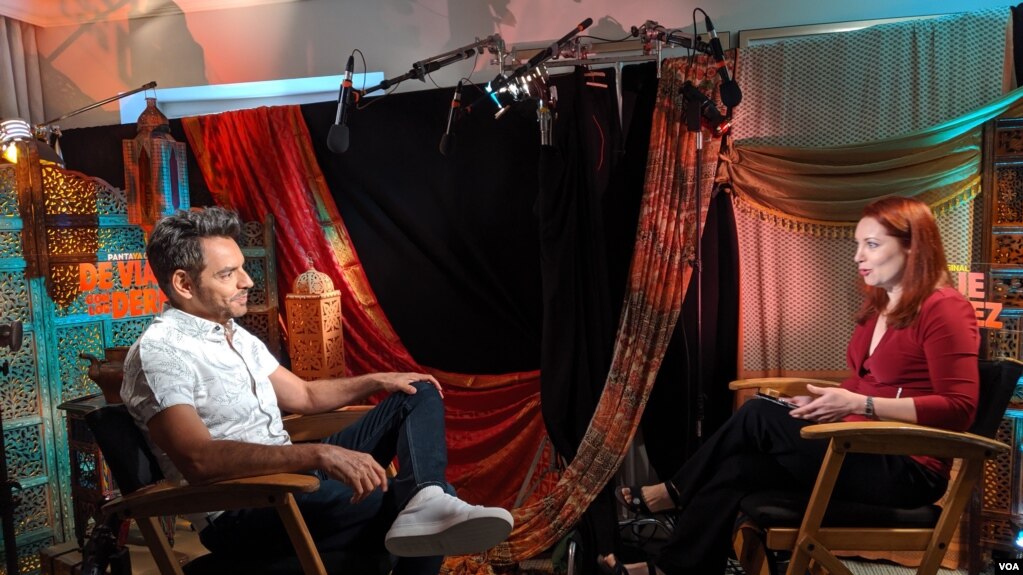
Crossing over is the most overused phrase in entertainment, because almost nobody actually does it. Eugenio Derbez did — completely, and in the hardest direction. He was not a promising newcomer when he arrived in Hollywood’s sights; he was already one of the biggest television stars in the Spanish-speaking world, a man who had to risk a finished legacy to start again in a language he was still mastering. That he succeeded is why his name keeps trending years later, and why our lifestyle and entertainment coverage returns to his career as the template for how it is done.
A dynasty, then a kingdom of his own
Derbez was born into Mexican entertainment royalty — his mother, Silvia Derbez, was a beloved telenovela star — but inheritance only opens the first door. He built his own kingdom in sketch comedy, creating characters that Mexican audiences can still quote on sight, and fronting family sitcoms that ran for years. In Mexico, he was not a comedian among others; he was the comedian, the kind of fixture who shapes a country’s sense of humour for a generation.
That stature is precisely what makes the next chapter remarkable. Stars at that altitude usually protect it. Derbez instead bet it on a film he directed, co-wrote and starred in, made in Spanish, about a washed-up playboy forced to raise a child — a premise Hollywood logic would have rejected at the door.
The film that changed everything
Instructions Not Included became the highest-grossing Spanish-language film in United States history, a word-of-mouth phenomenon that played for months. Its success was not a curiosity; it was data Hollywood could not ignore, proof that Derbez carried an audience of millions across the border with him. The doors that opened afterwards — studio comedies, a remake of Overboard with the genders flipped and Derbez in the lead, voice work in major animated franchises — were different from the “ethnic sidekick” offers that had historically been the ceiling for Latin American stars in English-language film.
Then came the prestige turn: a warm, pivotal role in CODA, the independent drama that won the Academy Award for Best Picture, which placed Derbez in front of an audience that had never seen his comedy at all. His full filmography, from the telenovela years to the Oscar stage, is catalogued on his encyclopedia entry — and it reads like two complete careers stapled together, because it is.
Producer, patriarch, platform
The modern Derbez is as much a builder as a performer. Through his production company he has developed series and films on both sides of the border, including a hit streaming comedy built around his own family’s very public dynamic, and he has used his leverage to put Spanish-language storytelling in front of global platforms rather than treating English as the price of admission. At the same time he remains, in the public imagination, a family man — his children are performers in their own right — which gives his fame an unusual warmth: audiences feel they have watched him age, work and raise a family in public.
There is also a generational handover under way. A younger audience that never saw his sketch shows discovers him first as a dramatic actor or a voice in an animated hit, then works backwards into a thirty-year catalogue — the reverse of the usual fame cycle, and a large part of why his search interest refuses to follow the normal decay curve of a veteran star.
That is the real answer to why he trends. Derbez is not a nostalgia act or a one-hit crossover; he is a working star whose catalogue spans sketch comedy, melodrama, blockbuster voice roles and an Oscar-winning film, in two languages, for two enormous audiences. Very few entertainers in history can say that. Follow more entertainment profiles at Medium Bloggers.
