

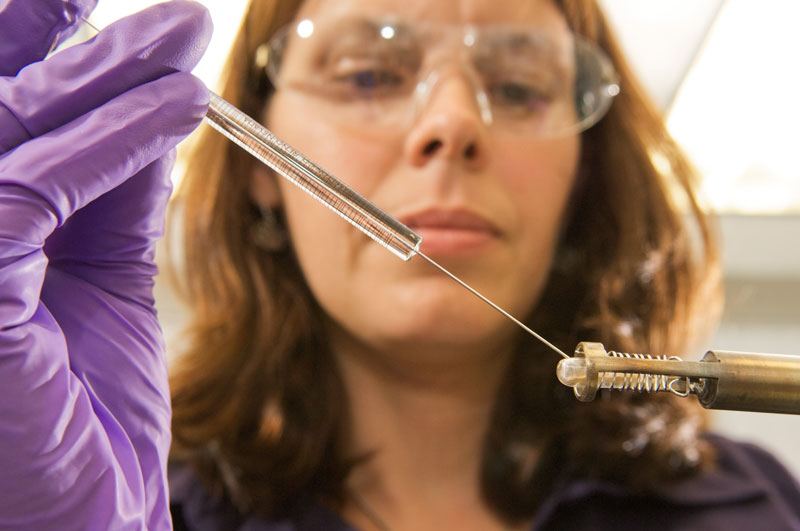
Most antibiotics in use today were discovered decades ago, and bacteria have had years to learn how to resist them. Infections that once cleared up with a simple course of tablets are becoming harder to treat, and doctors warn that some resistant bacteria now threaten routine operations. Soil may hold part of the answer. A spoonful of earth contains thousands of species of bacteria, many of which produce chemicals to fight their neighbours, and some of those chemicals can kill the bacteria that infect people. For years, scientists could only study the species that grew in a laboratory dish, which left most soil microbes unexplored. New methods let researchers grow these stubborn species in their natural soil, or read their DNA directly to find the genes for new antibiotics. The approach has already produced promising candidates, including compounds that attack bacteria in ways existing drugs cannot. One promising compound was found in a bacterium that had never been grown in a laboratory before.
What the Evidence Shows
Turning a soil chemical into a medicine is a long road. A compound that kills bacteria in a dish may also harm human cells, or it may be broken down too quickly in the body to work. Chemists must modify the molecule to make it safe and stable, and then it faces years of testing in animals and people. Funding is a problem too, since antibiotics are taken for days rather than for life, so companies earn less from them than from other medicines. Governments are now offering grants and new payment models to encourage the work. Scientists stress that new antibiotics alone will not solve resistance, and that careful use of existing drugs matters just as much. Even so, the soil is proving to be a rich hunting ground, and researchers say there are many more antibiotics waiting to be found there. Reporting and analysis from sources such as National Science Foundation track the same developments, and specialists following the soil-derived antibiotics say the direction is now consistent across independent lines of evidence.
The Wider Context
The wider context is a research landscape in which replication and open data now decide reputations. Findings connected to the soil-derived antibiotics are being checked by independent groups with shared datasets, and the teams involved publish their methods in full so rivals can test every step. That discipline is slower than a headline cycle, but it is why results in this area increasingly survive first contact with scrutiny.
What Happens Next
What happens next in the story of the soil-derived antibiotics will be decided by follow-up work already under way: larger samples, longer observation and instruments that have not yet come online. The researchers involved are unusually united on one point, that the current results justify the next investment of time and money. Readers will not have to wait long for the first tests of that claim. You can follow related developments in our coverage of science.
There is a practical lesson in all of this for readers deciding what to do today. Start with the verified facts, be wary of anyone promising certainty, and prefer reversible steps while the evidence is still developing. Circumstances differ by country, income and personal situation, so general guidance should always be weighed against your own context before you act on it in any significant or lasting way.
