

Introduction
The world of gaming is changing faster than ever before. What was once considered a simple way to pass the time has become a powerful combination of creativity, technology, communication, and digital Prediksi HK. Today, gaming offers experiences that allow people to explore imaginary worlds, compete with players across the globe, and enjoy incredibly detailed environments from the comfort of their homes.
Gaming technology is the driving force behind this transformation. Every year, new developments in computer hardware, artificial intelligence, graphics, internet connectivity, and software design introduce different possibilities for players and developers. Games are becoming more realistic, interactive, and accessible, giving people more ways to enjoy their favorite entertainment.
The interesting thing about modern gaming is that innovation is not limited to better graphics or faster devices. It also involves improving the way games are designed, how players communicate, and how digital environments respond to individual decisions. These changes are creating an entirely new direction for the gaming industry.
Understanding the Growing World of Gaming Technology
Gaming technology refers to the hardware, software, systems, and digital innovations used to develop and play video games. It includes everything from gaming computers and consoles to mobile applications, virtual reality devices, and online multiplayer platforms.
In earlier years, gaming experiences were relatively simple. Players had limited choices, basic controls, and small digital environments. Modern technology has completely changed those limitations. Today’s games can include massive maps, detailed characters, realistic environmental effects, and complex storylines.
Powerful processors and graphics cards allow gaming systems to handle demanding applications. Advanced software helps developers build more interactive experiences, while faster internet connections make online gaming smoother.
Another important development is the increasing availability of gaming technology. Players no longer need an expensive computer to enjoy digital entertainment. Smartphones, tablets, handheld consoles, and cloud platforms have made gaming available to a much wider audience.
How Advanced Graphics Are Making Games More Realistic
Graphics are among the first things players notice when experiencing a modern video game. Visual quality can make a digital environment feel more believable and enjoyable.
Modern graphics technology allows developers to create realistic lighting, detailed textures, natural character movements, and impressive environmental effects. These improvements help players feel more connected to the virtual worlds they explore.
One important development is ray tracing. This technology simulates how light interacts with different surfaces, helping games produce more realistic reflections, shadows, and lighting effects.
High-resolution displays and improved refresh rates also contribute to a better experience. They can make fast-moving scenes appear clearer and gameplay feel smoother.
However, excellent graphics alone cannot make a game successful. Players also care about interesting gameplay, engaging characters, smooth performance, and memorable stories. The strongest gaming experiences combine visual quality with creative game design.
Artificial Intelligence Is Giving Games a Smarter Personality
Artificial intelligence is becoming an important part of modern gaming development. It helps developers create environments and characters that can respond to different situations instead of following completely predictable patterns.
For example, computer-controlled opponents can use different strategies depending on the player’s actions. In adventure games, non-player characters can react to events and create more interesting interactions.
AI can also support game developers during production. It can assist with testing, identify certain technical problems, organize development tasks, and help generate ideas for environments or character behaviors.
Another interesting possibility is personalized gameplay. Future gaming systems may be able to adjust difficulty levels, challenges, or certain experiences based on how an individual plays.
Nevertheless, artificial intelligence should support human creativity rather than replace the imagination and decision-making that make game development special.
Virtual Reality Is Taking Players Into Another World
Virtual Reality, commonly called VR, is changing the traditional relationship between players and their games. Instead of watching everything through a television or monitor, VR allows users to experience computer-generated environments through specialized headsets.
These devices track head movements and can work with motion controllers to create interactive experiences. Players can look around, explore virtual locations, and interact with objects in supported games.
VR has exciting applications in different gaming genres. Adventure games can feel more immersive, racing simulations can provide a stronger sense of movement, and educational experiences can turn learning into interactive exploration.
Although VR technology has improved significantly, there are still challenges involving equipment prices, physical comfort, battery life, and motion sickness.
As manufacturers continue improving their devices, virtual reality may become a more common part of everyday gaming.
Cloud Gaming Is Removing Traditional Hardware Limitations
Not everyone can afford an expensive gaming computer or the latest console. Cloud gaming is introducing an alternative that could make advanced games available to more people.
The concept is simple: instead of running the entire game on a player’s device, powerful remote servers handle the processing. The resulting gameplay is streamed over the internet to a compatible screen.
This approach can reduce the need for expensive local hardware. Players may be able to enjoy supported games using laptops, smartphones, tablets, or smart televisions.
Cloud gaming also provides flexibility because users are not necessarily restricted to one physical gaming system.
However, a reliable internet connection is essential. High latency, slow download speeds, and unstable networks can create frustrating gameplay experiences.
Even with these limitations, improvements in internet infrastructure could make cloud gaming an increasingly important part of the entertainment industry.
Mobile Gaming Is Changing Entertainment Habits
Smartphones have become an important part of modern gaming culture. Their improved processors, graphics capabilities, and displays allow developers to create experiences that are much more advanced than early mobile games.
One major reason behind mobile gaming’s popularity is convenience. People can enjoy games almost anywhere without carrying a dedicated computer or console.
Mobile gaming also offers different types of experiences. Some players enjoy short puzzle games, while others prefer competitive multiplayer titles, strategy games, sports simulations, and open-world adventures.
Developers are also introducing better control systems, improved sound effects, and more detailed graphics to make mobile experiences enjoyable.
The growth of mobile gaming has created opportunities for independent developers and gaming businesses. It has also encouraged companies to experiment with new business models and digital communities.
Online Multiplayer Gaming Connects People Worldwide
Gaming has become a social experience rather than an activity limited to individual players. Online multiplayer technology allows people from different countries to participate in the same virtual environment.
Players can work together, compete against one another, complete missions, and communicate through voice or text features.
These experiences have created gaming communities where people share advice, discuss updates, organize competitions, and build friendships.
Online connectivity has also helped developers maintain long-term relationships with their audiences. Regular updates, seasonal events, and new downloadable content can keep players interested after a game is released.
However, online gaming also requires attention to privacy and security. Players should protect their accounts, avoid suspicious downloads, use strong passwords, and be careful when sharing personal information.
A positive gaming community depends on respectful communication and responsible online behavior.
Esports Is Turning Gaming Into a Professional Industry
Competitive gaming has developed into a major part of the entertainment world. Esports tournaments attract talented players, enthusiastic audiences, sponsors, and professional organizations.
Players compete in different genres, including fighting games, strategy titles, racing simulations, and multiplayer competitive games.
Professional esports requires much more than simply spending hours playing. Successful competitors often need communication skills, teamwork, concentration, strategic thinking, and consistent practice.
The industry also offers opportunities for people who do not compete professionally. Coaches, commentators, tournament organizers, event managers, video editors, and content creators all contribute to esports.
Streaming platforms have further expanded this industry by allowing players to share gameplay and interact with viewers.
Gaming technology provides the foundation for these activities through powerful hardware, reliable servers, broadcasting systems, and specialized competitive equipment.
The Role of Gaming Accessories and Modern Hardware
A great gaming experience depends on more than just the game itself. Gaming accessories and hardware also influence comfort, control, and performance.
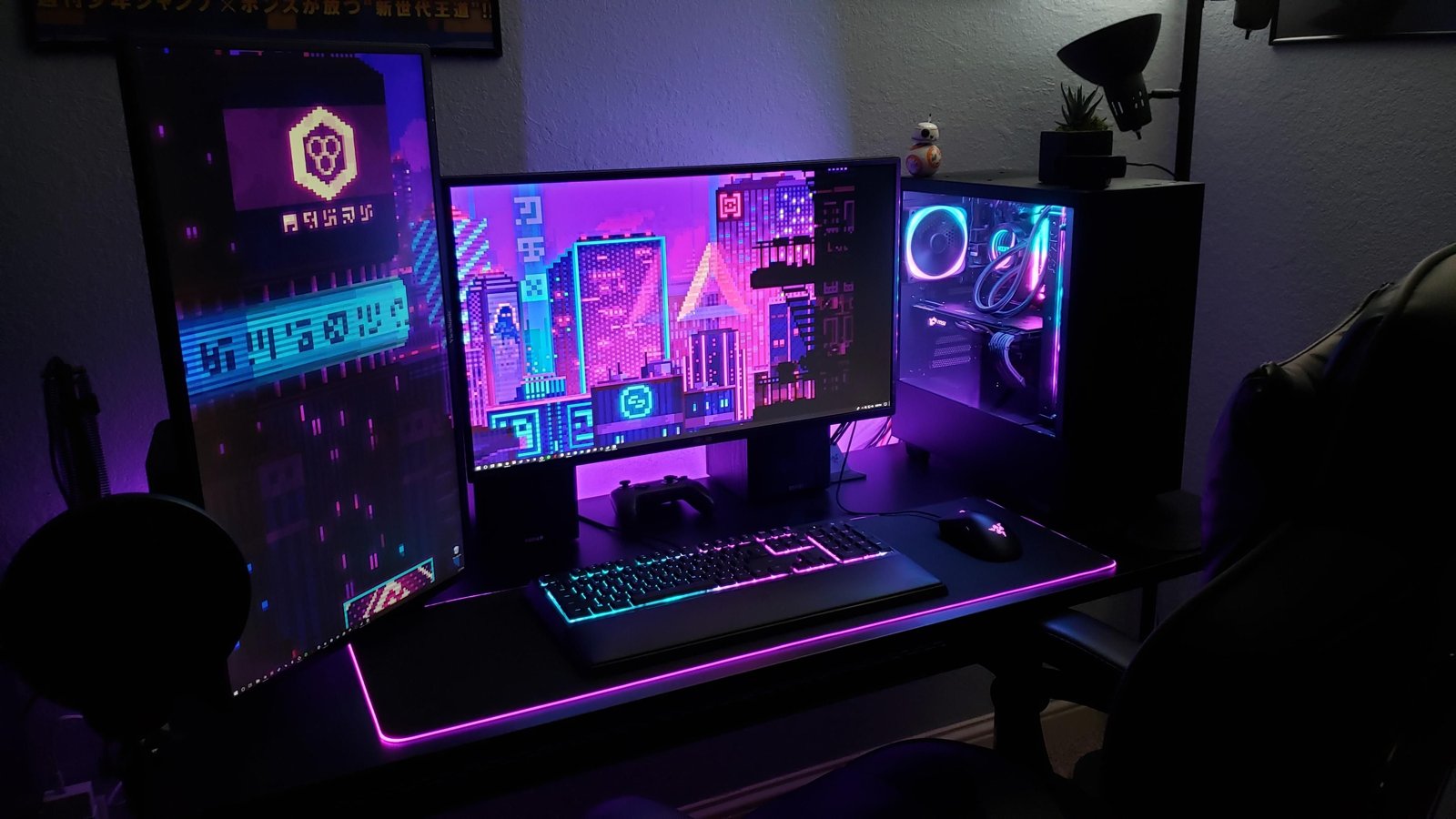
Gaming keyboards, responsive mice, specialized controllers, headsets, and high-refresh-rate monitors are designed to improve different aspects of gameplay.
For competitive players, accurate controls and responsive equipment can make a noticeable difference. For casual gamers, comfortable seating, good audio quality, and suitable display settings can make longer gaming sessions more enjoyable.
Gaming hardware is also becoming more customizable. Players can choose equipment according to their preferred genres, budgets, and personal requirements.
However, purchasing the most expensive accessories is not always necessary. The best equipment is the equipment that matches the player’s needs and provides reliable performance.
How Game Developers Are Creating Better Experiences
Behind every successful game is a combination of imagination, planning, programming, testing, and creative problem-solving.
Game developers use advanced software tools and game engines to build characters, design environments, create animations, and develop interactive systems.
Modern development tools have made it easier to experiment with different ideas. Independent studios can create original games without requiring the enormous resources traditionally associated with major gaming companies.
Player feedback has also become increasingly important. Developers can use community discussions and testing programs to understand what players enjoy and which areas need improvement.
Successful game development is not simply about adding more features. It is about understanding the audience and creating an experience that feels enjoyable, balanced, and meaningful.
Gaming Technology and Its Influence Beyond Entertainment
The impact of gaming technology is not limited to video games. Many of its innovations can also support education, training, and professional development.
For example, simulation technology can help people practice tasks in controlled digital environments. Virtual environments can be useful for learning complex concepts, exploring historical locations, and understanding technical processes.
Gamification is another interesting application. It introduces game-inspired elements such as achievements, challenges, and progress tracking into activities outside traditional gaming.
These approaches can make certain learning experiences more interactive and engaging.
Gaming technology also encourages digital creativity. Players and developers learn to understand interactive systems, experiment with software, and communicate through online platforms.
What Challenges Does the Gaming Industry Need to Overcome?
Despite its impressive progress, gaming technology still faces several challenges.
One major concern is affordability. Powerful gaming devices and accessories can be expensive, making advanced gaming experiences difficult to access for some people.
Another challenge is cybersecurity. Online platforms must protect user accounts, personal information, and payment details from potential threats.
Gaming addiction and unhealthy playing habits are also important concerns. Players should maintain a healthy balance between gaming, education, work, exercise, and social activities.
Developers must also consider accessibility. Features such as adjustable controls, subtitles, color customization, and different difficulty settings can make games more welcoming to a wider audience.
Addressing these challenges will be important for creating a sustainable and responsible gaming industry.
The Future of Gaming Technology
The next generation of gaming will likely introduce even more interesting developments. Artificial intelligence may support more responsive characters, while virtual reality could provide increasingly immersive experiences.
Cloud gaming services may continue expanding, allowing people to access advanced titles through different devices. Improved processors and graphics technology could also make digital environments more detailed and interactive.
Another important direction is cross-platform compatibility. This allows players using different devices to participate in supported games together, making multiplayer communities more connected.
Game development may also become more accessible as creative tools improve. Independent developers could have more opportunities to introduce original ideas and experiment with new types of gameplay.
The future will not only be about creating technically impressive games. It will also be about improving accessibility, encouraging creativity, protecting players, and making digital entertainment more enjoyable.
Conclusion
Gaming technology has completely changed the way people experience entertainment. What once began as simple electronic gameplay has developed into a sophisticated industry supported by artificial intelligence, advanced graphics, cloud computing, virtual reality, mobile devices, and global connectivity.
These innovations have created opportunities for players, developers, professional competitors, and businesses. They have also demonstrated that gaming can influence education, communication, creativity, and professional training.
Although challenges such as affordability, cybersecurity, and responsible gaming remain important, the industry continues to move forward through innovation and creativity.
Ultimately, gaming technology is not just about better machines or more realistic graphics. It is about creating experiences that bring people together, encourage imagination, and make digital worlds feel more alive. The next chapter of gaming will be shaped by the ideas and technologies that turn today’s possibilities into tomorrow’s entertainment.
