

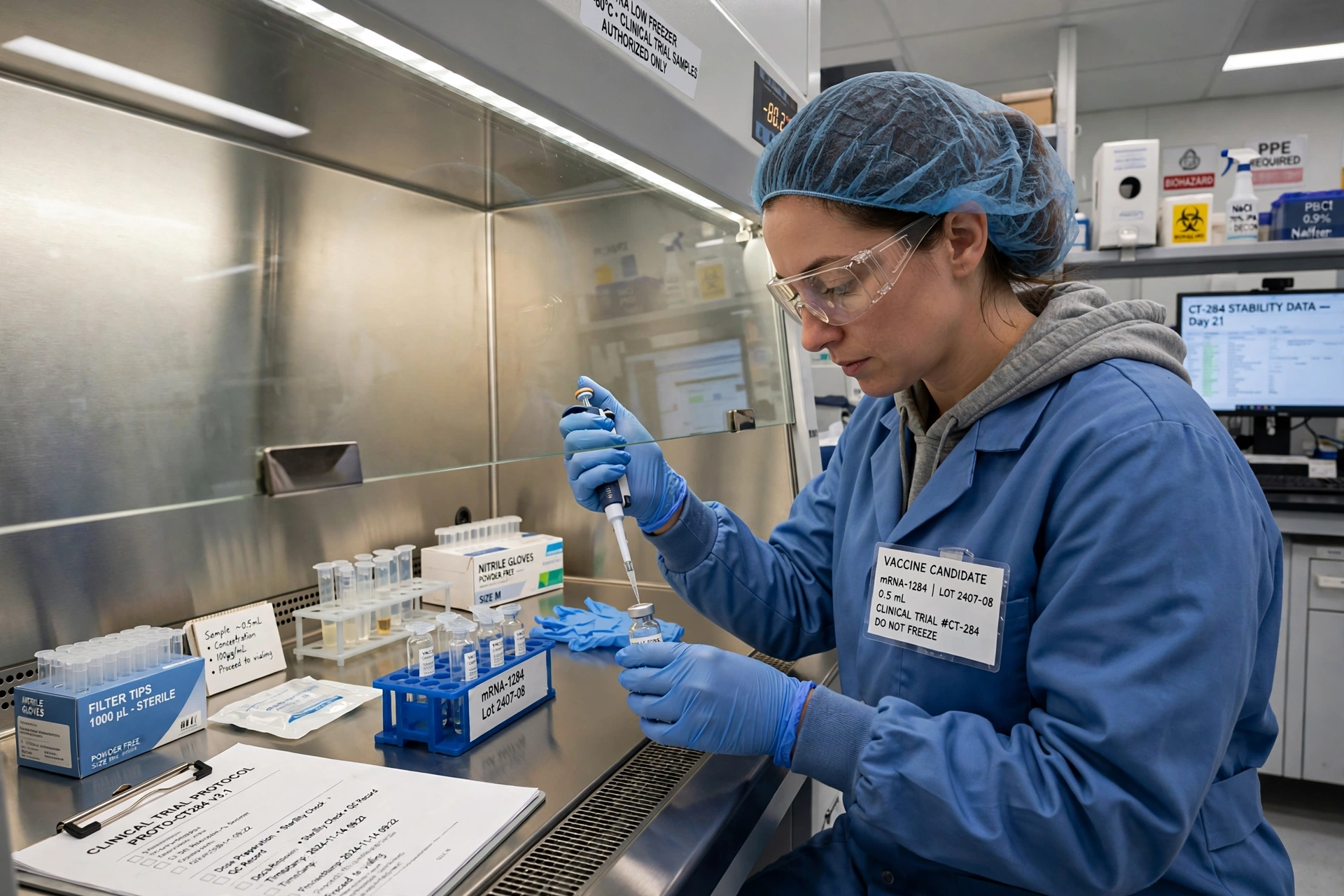
Most vaccines are made in enormous batches and given to millions of people. NeoVax turns that idea on its head: it is a cancer vaccine designed and manufactured for exactly one person, based on the unique mutations in their own tumour. Now, a phase 1 trial published in Nature Medicine has found that NeoVax, combined with the immunotherapy drug nivolumab, is feasible to make and has an acceptable safety profile in patients with platinum-sensitive ovarian cancer.
The words “phase 1” matter. This was a small, early study designed to test safety and practicality — not to prove the vaccine shrinks tumours or extends life. Keeping that straight is the key to understanding everything about this story.
Step by step: how NeoVax is made
First, doctors sequence the DNA of the patient’s tumour and compare it with their healthy cells. The differences — the mutations — can produce abnormal protein fragments called neoantigens, which appear only on cancer cells.
Next, computer algorithms predict which neoantigens the patient’s immune system is most likely to spot. Up to 20 of the best candidates are built into a personalised vaccine. The hope is that the vaccine teaches immune cells to recognise and attack cancer carrying those same fingerprints, while nivolumab blocks one of the signals cancers use to switch immune cells off.
Why ovarian cancer is the testing ground
Ovarian cancer often returns after chemotherapy, even in patients whose disease first responded well to platinum-based treatment — the “platinum-sensitive” group enrolled in this trial. A therapy that could train the immune system to patrol for leftover cancer cells would fill a real gap, which is why researchers are testing the idea here.
Much of modern medicine is moving in this individualised direction, from bespoke vaccines to wearable sensors such as those we covered in glucose monitors helping people with type 2 diabetes. The common thread is treatment shaped by one person’s data rather than population averages.
The honest bottom line
The trial achieved what it set out to do: vaccines were successfully manufactured for participants, delivered alongside nivolumab, and tolerated with a safety profile researchers describe as acceptable. Immune responses to vaccine targets were observed, which suggests the concept works biologically as intended.
What it did not — and could not — show is clinical benefit. That requires larger randomised trials, years of follow-up, and solutions to the cost and complexity of making a unique product for every patient. NeoVax is best understood as a promising, carefully tested first step, and the researchers present it in exactly those terms.
Why “platinum-sensitive” is an important detail
The phrase “platinum-sensitive” appears in almost every report of this trial, and it is worth unpacking. Ovarian cancers are commonly treated first with platinum-based chemotherapy drugs. If the cancer responds and stays away for a good interval before returning, doctors call it platinum-sensitive, because the same class of drug is likely to work again. If it resists treatment or returns very quickly, it is called platinum-resistant, and options narrow sharply.
Testing the vaccine in platinum-sensitive patients makes scientific sense. These are patients whose disease has already shown it can be pushed back, which may give a vaccine strategy — one that works by training long-term immune surveillance — its fairest chance. It also defines the limit of the result: the study says nothing directly about patients with resistant disease, who face the hardest prognosis of all.
Future trials will show whether the approach can be extended, combined with other drugs or moved earlier in treatment. For readers following the story, the practical takeaway is the one researchers themselves offer: a complicated, personalised idea has been shown to work logistically and to be tolerable for patients. In the slow, careful business of cancer research, that is a milestone — a small one by design, and honestly labelled.
One final point is worth making for anyone discussing this research with family or friends. Early trial results travel fast online, and the distance between “feasible and acceptably safe” and “cancer vaccine works” is exactly where misunderstandings grow. Sharing the story with its caveats intact is not pessimism; it is how promising science keeps the public’s trust long enough to finish the job.
