

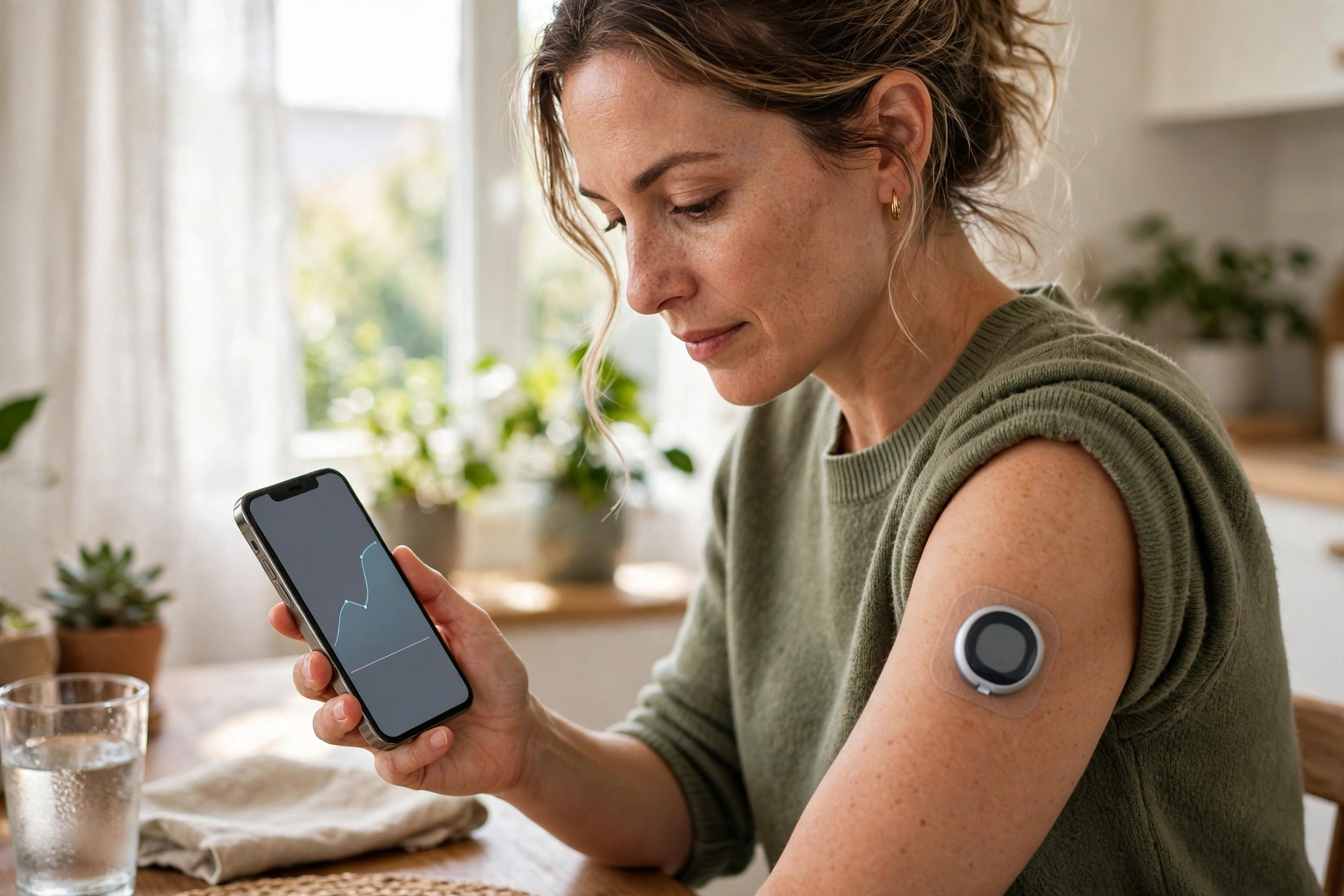
Continuous glucose monitors, the small wearable sensors long associated with people who use insulin, can also make a substantial difference for adults with type 2 diabetes who do not. In what researchers describe as the largest clinical trial of its kind, published in the New England Journal of Medicine, adults using the monitors spent approximately five more hours a day within their target blood sugar range. The findings, summarised by the University of Colorado Anschutz Medical Campus, strengthen the case for widening access to a technology that was once reserved for a much narrower group of patients.
What the Trial Found
Time in range is the measure doctors increasingly use alongside the familiar A1C test, because it shows how blood sugar behaves across the whole day rather than as a single average. Five additional hours a day in the healthy range is a meaningful shift: it means fewer long spikes after meals, fewer overnight highs and lows, and a pattern of control that is easier to sustain. Participants could see their readings in real time, and that feedback loop appears to be central to the result. When people can see exactly how a particular meal, walk or medication timing affects their glucose, they tend to adjust their behaviour in small, practical ways that add up.
That distinction matters because type 2 diabetes is usually managed through routine: regular testing, balanced meals, activity and medication taken consistently. Our guide to what tests should be included in a corporate health checkup plan covers how structured screening supports that routine, and continuous monitoring adds a daily, personal layer on top of those periodic checks.
How Continuous Glucose Monitors Work
A continuous glucose monitor uses a tiny sensor, usually worn on the upper arm or abdomen, to measure glucose in the fluid between cells every few minutes. The readings are sent to a phone or a small receiver, where they appear as a live graph with arrows showing whether levels are rising, falling or holding steady. There are no routine finger sticks, and the wearer can set alerts for levels that drift too high or too low. Sensors are typically replaced every ten to fourteen days, depending on the model.
The technology described in journals such as the New England Journal of Medicine has become steadily smaller, cheaper and easier to use, which is one reason researchers are now testing it in broader populations. For someone newly diagnosed, the first weeks with a sensor can be an education in itself, revealing patterns that a single morning reading would never show.
What This Means for Patients and Doctors
For patients, the immediate appeal is clarity. Instead of guessing why a reading is high, they can look back at the graph and connect the result to lunch, a missed walk or a stressful afternoon. For doctors, the same data makes appointments more productive, because treatment changes can be based on weeks of continuous information rather than a handful of snapshots. That said, the monitors are tools, not treatments in themselves. They work best when the information they provide is supported by proper medical advice, sensible eating and regular activity, the same foundations discussed in our article on health supplements and support for body and mind.
Questions of cost and coverage remain. In many health systems, reimbursement for continuous monitors has historically been tied to insulin use, which is precisely the barrier this trial challenges. If people who do not use insulin gain five hours a day in range, insurers and health services will face growing pressure to reconsider those rules. Wider prescribing would also require clinics to help patients interpret their data, so that the graphs inform decisions instead of causing anxiety.
The Bottom Line
Type 2 diabetes affects hundreds of millions of people worldwide, and even modest improvements in daily control can reduce the long-term risk of complications affecting the eyes, kidneys, nerves and heart. A large, well-conducted trial showing five extra hours a day in the target range, in patients who do not use insulin, is therefore an important result rather than a marginal one. It does not replace medication, checkups or lifestyle change, but it gives patients something those tools alone cannot: immediate, honest feedback, all day and every day. For many people managing this condition, that feedback may be the difference between guessing and knowing.
