

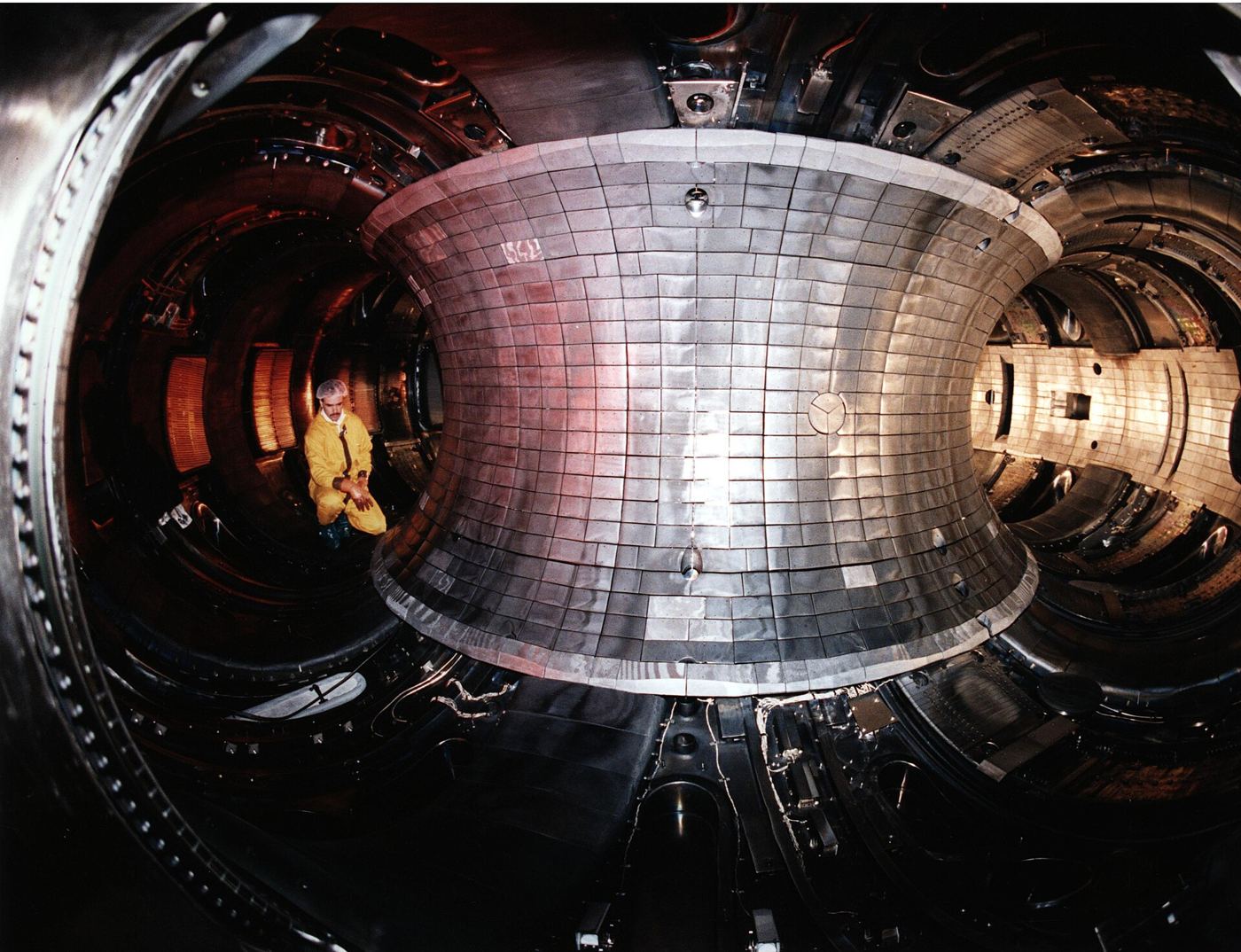
Commonwealth Fusion Systems says its SPARC reactor in Devens, Massachusetts, is about 80 percent complete, with switch-on expected in 2027 and a campaign to prove net fusion energy to follow. The compact tokamak is designed to release more energy from fusion than is used to heat its fuel, a milestone known as Q greater than one that no magnetic fusion device has yet reached. SPARC is built around 18 D-shaped superconducting magnets, each weighing 24 tonnes, that confine plasma at temperatures above 100 million degrees. The company expects the machine to produce about 140 megawatts of fusion power in ten-second pulses, with a predicted energy gain of about 11 under standard assumptions.
What the Evidence Shows
The project reached its latest milestone in November, when the company’s vice president of plasma physics, Phil Snyder, told the American Physical Society’s plasma physics meeting that the team was in the home stretch and expected to turn the machine on next year. Chief executive Bob Mumgaard repeated the message on November 13, saying SPARC was about 80 percent complete and due to start up in 2027. The schedule has already slipped once, from an original target of 2025, and SPARC will not generate electricity: it is a physics proof. If it works, the company plans to build ARC, a roughly 400-megawatt power plant, using the same magnet technology for its first power plant. Reporting and analysis from sources such as National Science Foundation track the same developments, and specialists following SPARC fusion reactor 80 percent complete say the direction is now consistent across independent lines of evidence.
The Wider Context
The wider context is a research landscape in which replication and open data now decide reputations. Findings connected to SPARC fusion reactor 80 percent complete are being checked by independent groups with shared datasets, and the teams involved publish their methods in full so rivals can test every step. That discipline is slower than a headline cycle, but it is why results in this area increasingly survive first contact with scrutiny.
What Happens Next
What happens next in the story of SPARC fusion reactor 80 percent complete will be decided by follow-up work already under way: larger samples, longer observation and instruments that have not yet come online. The researchers involved are unusually united on one point, that the current results justify the next investment of time and money. Readers will not have to wait long for the first tests of that claim. You can follow related developments in our coverage of science.
There is a practical lesson in all of this for readers deciding what to do today. Start with the verified facts, be wary of anyone promising certainty, and prefer reversible steps while the evidence is still developing. Circumstances differ by country, income and personal situation, so general guidance should always be weighed against your own context before you act on it in any significant or lasting way.
