

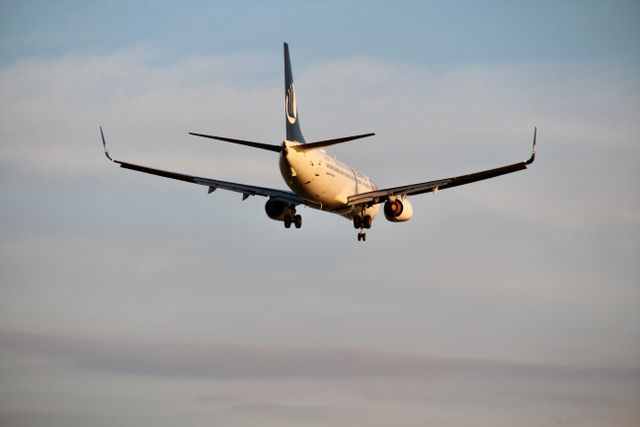
Think about the plane you might board tomorrow. Somewhere inside it, sensors are already watching for trouble. Not reacting to it, but watching for it before anything goes wrong. That shift from reactive maintenance to predictive monitoring is one of the defining differences between modern aviation and earlier eras of flight. Safety improvements did not happen by chance. They resulted from decades of innovation, testing, and the development of multiple layers of protection designed to catch problems before they become emergencies. Today, aviation is widely regarded as one of the safest forms of transportation in the world.
Advanced Collision Avoidance Systems
Modern aircraft do not rely solely on air traffic controllers to maintain safe separation from other airplanes. They are equipped with onboard collision avoidance systems that continuously monitor surrounding airspace, regardless of weather conditions or visibility.
One of the most important technologies is the Traffic Alert and Collision Avoidance System (TCAS). This system tracks nearby aircraft, identifies potential conflicts, and provides pilots with clear instructions designed to maintain safe separation. Rather than simply issuing warnings, TCAS can recommend specific actions, such as climbing or descending, to avoid a potential collision.
These systems operate continuously throughout every phase of flight and provide an additional layer of protection beyond traditional air traffic control services. By combining human oversight with advanced automation, aviation has significantly reduced the risk of midair collisions over the past several decades.
Engine Monitoring and Predictive Maintenance
Aircraft engines are monitored by extensive networks of sensors that measure temperature, pressure, vibration, fuel flow, and numerous other performance indicators. These sensors generate a constant flow of information that allows airlines and maintenance teams to track engine health in real time.
Modern predictive maintenance programs use this data to identify subtle changes that may indicate wear or developing issues. Rather than waiting for a problem to become serious, technicians can schedule maintenance before a component reaches a critical stage.
This proactive approach offers several benefits. Aircraft spend less time out of service due to unexpected repairs, engines operate more efficiently, and airlines can reduce the likelihood of in-flight mechanical issues. Predictive maintenance also helps extend the lifespan of expensive equipment while improving operational reliability.
Ground operations require the same level of precision. Fueling and fluid transfer procedures depend on accurate measurement and servicing equipment. Tools such as Macnaught flow meters help support consistent maintenance and fueling standards, contributing to overall aircraft reliability and operational safety.
Structural Health Monitoring Systems
Every flight places stress on an aircraft. Pressurization cycles, changing temperatures, turbulence, and aerodynamic forces all affect the structure over time. Modern aircraft increasingly use structural health monitoring systems to track these effects continuously.
Sensors positioned throughout the airframe measure strain, temperature, vibration, and structural movement. This information allows engineers and maintenance personnel to monitor how the aircraft responds to normal operations and identify areas that may require attention.
If a small crack, unusual stress concentration, or other concern begins to develop, monitoring systems can often detect early warning signs before significant damage occurs. Maintenance teams can then focus inspections on specific areas rather than relying solely on broad visual examinations.
This data-driven approach improves efficiency while helping maintain the structural integrity of the aircraft throughout its service life.
Weather Detection and Avoidance Technology
Weather has always been one of aviation’s greatest challenges. Modern technology helps pilots identify and avoid hazardous conditions more effectively than ever before.
Advanced weather radar systems provide real-time information about precipitation, turbulence, storm activity, and other atmospheric conditions along a flight path. These systems allow pilots to make informed routing decisions that improve both safety and passenger comfort.
Additional technologies further enhance situational awareness. Lightning detection systems help identify areas of electrical activity, while terrain awareness systems use GPS information and digital terrain databases to warn pilots of potential obstacles. Enhanced weather information from ground-based sources can also be integrated directly into cockpit displays, giving flight crews access to a broader understanding of developing conditions.
Together, these technologies help crews avoid dangerous weather and reduce risks associated with poor visibility, turbulence, and changing environmental conditions.
Redundancy and Fail-Safe Systems
One of the most important principles in aviation engineering is redundancy. Aircraft are designed so that no single failure is likely to result in a catastrophic outcome.
Critical systems often have multiple backups. Hydraulic systems, electrical systems, navigation equipment, computers, and communication systems are typically designed with redundancy in mind. If one component fails, another can assume its function and allow the aircraft to continue operating safely.
Commercial aircraft can also continue flying safely following certain equipment failures because engineers intentionally design systems to tolerate unexpected situations. Backup generators, multiple flight control computers, duplicate sensors, and alternative power sources all contribute to this protective framework.
Of course, redundancy alone is not enough. These systems require regular testing, inspections, and maintenance to ensure they function as intended. The combination of robust design and disciplined maintenance is what makes modern aviation so dependable.
Conclusion
Safety in modern aviation is not the result of a single invention. It comes from multiple systems working together at all times. Collision avoidance technology, predictive engine monitoring, structural health sensors, weather detection systems, and extensive redundancy all contribute to a highly reliable aviation environment.
Real-time data collection, advanced analytics, and proactive maintenance allow potential issues to be addressed long before they become serious concerns. Meanwhile, backup systems ensure that aircraft can continue operating safely even when individual components fail.
Commercial aviation’s remarkable safety record reflects decades of engineering innovation, rigorous testing, and a commitment to continuous improvement. As technology continues to advance, aircraft are becoming even safer, more reliable, and better equipped to support the millions of passengers who travel by air every day.
