

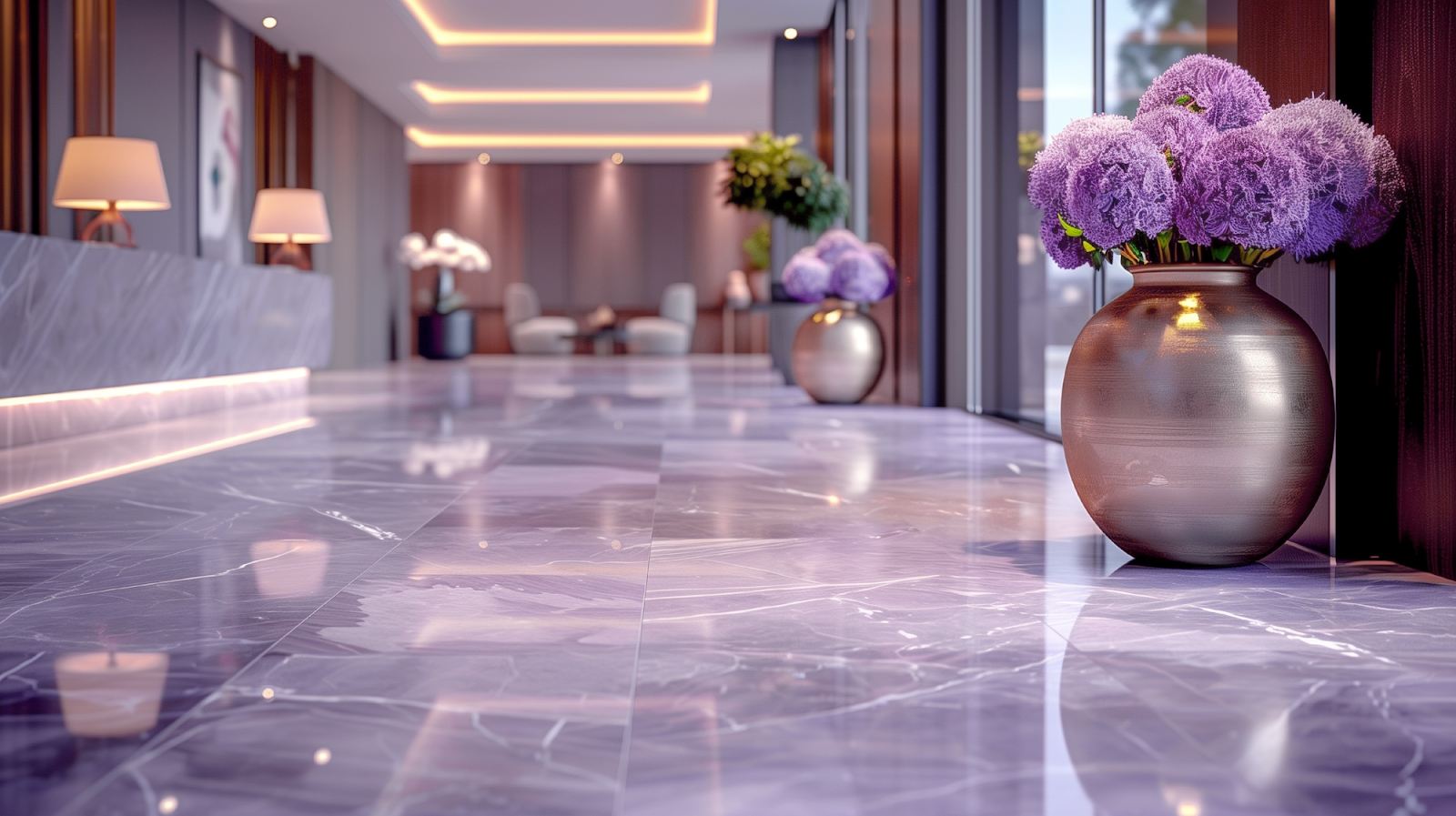
Granite flooring is more resistant to scratches, stains, impact, and etching. So, they require less maintenance than marble when used in high-traffic areas. Marble flooring is costlier to install and requires more maintenance, but offers an elegant look.
Granite and marble are naturally occurring stones that are popular for their natural beauty. Granite is an igneous rock that is recognised for its durability. Conversely, marble is metamorphic, looks good, and offers classic elegance. Making the choice between the two types of rocks for your home’s flooring can be challenging due to the distinct properties of these rocks.
Apart from the distinctions between marble and granite flooring designs, the maintenance, aesthetics, and applications of the two also differ significantly. So, if you want to learn more about the difference, then keep reading.
Understanding the Basics- What Makes Granite and Marble Different?
The main difference between granite and marble is based on their composition, geological formation, and physical properties. Here are the factors to consider when deciding between marble and granite flooring designs.
| Granite | Marble | |
| Type: | Igneous rock | Metamorphic rock |
| Formation: | Magma cools slowly, deep within the Earth. | Limestone is subjected to intense pressure and heat. |
| Appearance: | Granular or speckled patterns, with mica, quartz, and feldspar contributing to diverse colours. | Elegant veining and a smooth, crystalline look, with grey, white, or cream colours. |
| Durability: | Harder, denser, and very resistant to heat, acids, and scratches. | Softer, prone to scratches and stains, and affected by acids. |
| Mohs Scale: | 6 to 7 | 3 to 5 |
| Porosity: | Less porous | Highly porous |
| Application: | Idea for high-traffic areas (like kitchen countertops) | Suitable for low-traffic areas (like bathroom vanities) |
| Maintenance: | High resistance eliminates the need for extensive maintenance. | Requires regular sealing and careful maintenance. |
Table 1: Comparing Granite and Marvel Flooring
Durability Comparison- Which Flooring Lasts Longer?
Granites are known for lasting longer than marble as they have superior physical properties.
Scratch Resistance
Granite has significantly greater hardness than marble. This makes granite more resistant to scratches, etching, and abrasion. So, granite flooring designs will last longer in areas with high foot traffic.
Heat Resistance
Both granite and marble are very resistant to heat, making them suitable in underfloor heating systems or around fireplaces. But granite is known for tolerating slightly higher temperatures better.
Moisture Absorption
The porosity of granite is very low compared to marble. So, granite is less likely to absorb liquids, thus protecting granite flooring designs from staining and moisture damage when properly sealed. Marble requires more frequent sealing.
Maintenance Needs- How Much Effort Does Each Stone Require?
Depending on the usage, marble and granite flooring require moderate to high efforts for maintenance.
Cleaning Requirements
Daily cleaning of both granite and marble flooring can be done by sweeping or grit removal. This helps remove micro scratches. For weekly care, you must use a pH-neutral cleaner that is designed specifically for stone flooring. Clean up spills promptly and avoid harsh chemicals to prevent damage to the finish.
Sealing and Stain Removal Frequency
Although granite is less porous, more stain-resistant, and less susceptible to acid etching than marble, both types of flooring require regular sealing. You can do the sealing work every 1 to 2 years. But increase frequency if the foot traffic is high and the quality of the sealant is poor.
Long-Term Wear and Restoration
Both marble and granite flooring designs stay durable with proper care. But due to dulling and scratching over time, restoration work is still needed. You can go for professional polishing to restore the shine. You can also perform refinishing to remove deeper etches and scratches.
Cost Comparison- Initial and Long-Term Expenses
Your long-term expenses will be lower if you go for granite flooring designs. Marble undoubtedly looks more elegant, but regular upkeep and specialised repairs lead to higher long-term costs.
Installation of granite flooring is also a standard process. However, you need skilled labour for installing marble flooring due to its delicate nature. Skills are also needed to match the patterns of the unique veining of marbles. So, the labour cost will be higher for installing marble flooring. Additionally, marble costs more than granite as a material. You can further bring down costs by finding a reliable low-cost granite supplier.
Best Areas of the Home for Marble vs. Granite Flooring
Here are the recommended areas of the home for installing marble and granite flooring designs.
| For Granite Flooring Designs | For Marble Flooring Designs |
| Kitchens and Bathrooms | Living Rooms |
| Hallways, Entryways, and Outdoor Patios | Bedrooms |
| High-Traffic Commercial Areas | Formal Areas |
Table 2: Best Areas for Marble and Granite Flooring
Style Considerations- Which One Fits Your Interior Theme?
You must consider the type of flooring that fits your interior theme. If your home’s theme is modern, minimalist, or contemporary, then granite’s patterns might be a better match than marble’s clean veining. On the other hand, if your home’s theme is luxury, classic, or traditional, you will get a more elegant look with marble flooring.
Safety Considerations- Slip Resistance & Temperature Feel
In the context of flooring, safety considerations revolve around the properties and surface texture of the material. Here is what to consider.
- Slip Resistance: Polished surfaces, like those of polished marble, tend to become smooth. So, they become significantly more slippery when wet, thus increasing the risk of falls. You must get slip-resistant finishes in wet areas like kitchens and bathrooms to maximise safety.
- Temperature Feel: Granite tends to feel cooler to the touch than many other flooring materials. You may find this a comfort factor, depending on the climate you live in and the purpose of the flooring.
Ready to Explore Flooring Designs?
Granite offers greater scratch resistance, durability, and impact tolerance than marble, and thus also requires less maintenance. Granite flooring designs are also less vulnerable to water absorption and staining, as the material is less porous. On the other hand, marble offers an elegant look. However, the softer and porous nature of the material makes it more prone to staining and damage in high-traffic areas.
Regardless of the properties, each type of material offers distinct advantages and aesthetic appeal. So, reach out to a marble and granite supplier today, and explore flooring design options that best match your preferences and your home’s theme!
